
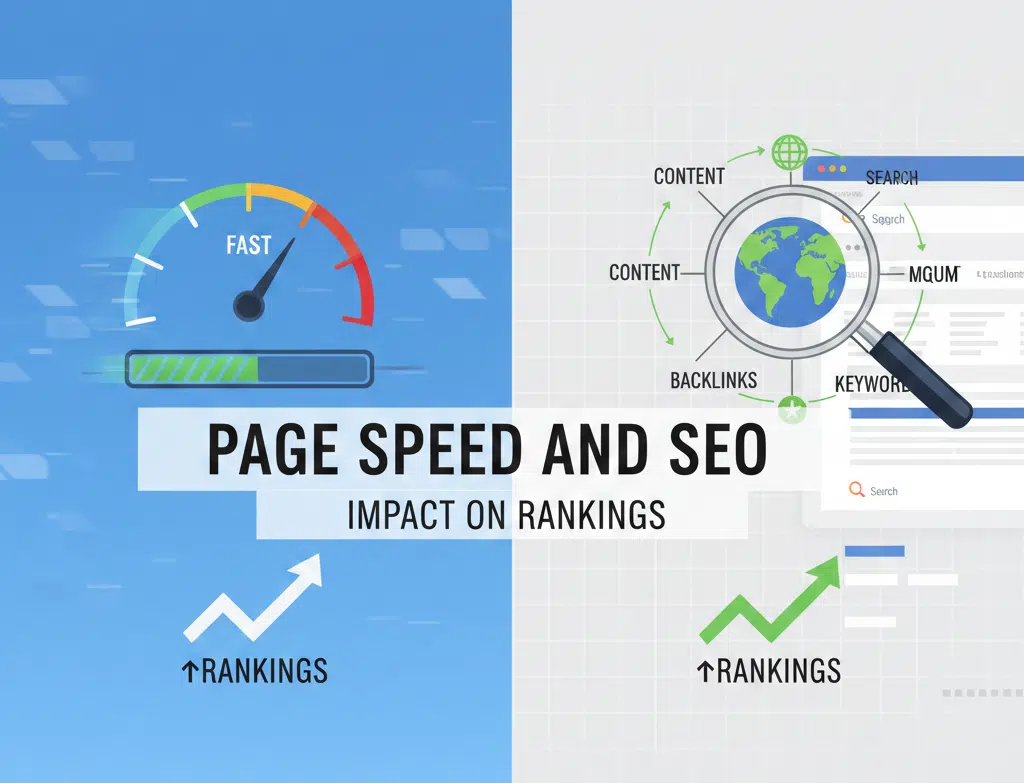
The digital landscape has become increasingly unforgiving when it comes to slow-loading websites. Users have developed an expectation for instant gratification, and search engines have evolved to reward sites that meet these expectations. The relationship between page speed and search engine optimization is no longer a matter of correlation but a direct causation that can make or break your online visibility. Understanding this connection isn’t just about technical knowledge anymore; it’s about recognizing how user behavior, search algorithms, and business outcomes intertwine in ways that fundamentally shape the modern web.
The Psychology Behind Speed Expectations
Human perception of time online operates on a completely different scale than in the physical world. Research into cognitive psychology reveals that users form opinions about websites within the first 50 milliseconds of landing on a page. This split-second judgment isn’t about content quality or design aesthetics; it’s about responsiveness. When a page loads quickly, users unconsciously interpret this as competence, reliability, and professionalism. Conversely, every additional second of load time chips away at credibility and trust.
The threshold for acceptable load times has been shrinking year over year. What was considered fast in 2015 is painfully slow today. Mobile users, who now constitute the majority of web traffic, are particularly intolerant of delays. They’re often browsing on the go, multitasking, or dealing with inconsistent network conditions. A three-second load time might not sound egregious, but in the mobile context, it represents an eternity during which users can easily switch to a competitor’s site. Search engines understand this behavioral pattern intimately because they have access to billions of data points showing exactly when and why users abandon websites. This understanding directly influences how they construct their ranking algorithms.
Companies investing in Best SEO services recognize that technical optimization forms the foundation of all other SEO efforts. Without a solid technical base that includes optimal page speed, even the most brilliant content strategy or sophisticated link-building campaign will underperform. Professional SEO services have evolved beyond keyword optimization and backlink acquisition to encompass comprehensive performance auditing, infrastructure recommendations, and continuous monitoring of speed metrics. The most effective SEO professionals treat page speed not as a separate technical concern but as an integral component of overall search visibility strategy. They understand that Google’s algorithm updates increasingly favor sites that deliver exceptional user experiences, and speed is the most measurable, objective component of that experience.
How Search Engines Measure and Evaluate Speed
Search engines don’t simply visit your website once, note the load time, and assign a ranking accordingly. The measurement process is far more sophisticated and continuous than most website owners realize. Google employs multiple systems to gather speed data, including both lab-based testing and real-user monitoring. Lab testing involves controlled environments where Google’s crawlers load pages under standardized conditions, measuring everything from server response times to render completion. This provides consistent, comparable data across millions of websites.
Real-user monitoring, however, tells a different and often more important story. Through Chrome browser data and other sources, Google collects actual user experience metrics from people visiting websites in the wild. These metrics reveal how pages perform across different devices, network conditions, geographic locations, and user contexts. A page might load quickly on a high-speed fiber connection in San Francisco but crawl on a 3G network in rural India. Google’s algorithm takes this variability into account, understanding that user experience differs dramatically based on circumstances.
The Core Web Vitals framework represents Google’s attempt to distill complex performance data into three key metrics that matter most for user experience. Largest Contentful Paint measures how quickly the main content becomes visible, reflecting the user’s perception of loading speed. First Input Delay captures interactivity, measuring the time between a user’s first action and the browser’s response. Cumulative Layout Shift quantifies visual stability, penalizing pages where elements jump around unexpectedly during loading. These metrics aren’t arbitrary; they’re based on extensive research into what actually affects user satisfaction and engagement.
The Cascade Effect of Slow Loading Times
When a website loads slowly, the negative consequences extend far beyond immediate user frustration. Search engines observe what users do after landing on your page, and slow speeds trigger a cascade of behavioral signals that all point toward poor quality. The bounce rate increases as impatient users hit the back button and return to search results. Time on site decreases because even users who stay don’t explore deeply. Pages per session drop because navigation between pages becomes tedious. Conversion rates plummet because users abandon forms, shopping carts, and signup processes before completion.
Each of these behavioral signals feeds back into search engine algorithms as indirect evidence about page quality and relevance. If users consistently abandon your site quickly after arriving from search results, algorithms interpret this as a mismatch between the search query and your content. The tragic irony is that your content might be perfectly relevant and valuable, but users never get far enough to discover this because the loading experience drives them away first. This creates a vicious cycle where poor speed leads to poor behavioral metrics, which leads to lower rankings, which leads to less qualified traffic, which further degrades metrics.
The business impact manifests in concrete financial terms. E-commerce sites see direct revenue losses from speed issues because shopping cart abandonment correlates strongly with load times. Content sites lose advertising revenue as page views and session duration decline. Lead generation sites watch conversion rates drop as form completion rates suffer. These aren’t hypothetical scenarios; multiple studies have quantified the relationship between speed improvements and revenue increases, with some companies reporting double-digit percentage gains in conversions after implementing comprehensive performance optimizations.
The Technical Reality of Modern Web Performance
Understanding why websites load slowly requires examining the technical complexity of modern web pages. Today’s average webpage loads several megabytes of data, executes thousands of lines of JavaScript, renders dozens of images, and makes requests to multiple third-party services. Each of these elements represents a potential bottleneck. The server must respond quickly to the initial request, which depends on hosting infrastructure, database query efficiency, and server-side code optimization. Then the browser must download all the resources, which depends on file sizes, compression, and network latency.
JavaScript has become both incredibly powerful and incredibly problematic for page speed. Modern web applications rely heavily on JavaScript frameworks to create interactive experiences, but these frameworks often ship massive amounts of code that must be downloaded, parsed, and executed before the page becomes usable. The trend toward single-page applications has exacerbated this issue, with some sites requiring users to download megabytes of JavaScript just to view basic content. The parsing and execution of JavaScript happens on the main thread, blocking other critical rendering work and creating the sensation of unresponsiveness that frustrates users.
Images represent another common performance bottleneck despite being ostensibly simple. Many websites serve images that are far larger than necessary, consuming bandwidth and memory without providing visible benefits. The proliferation of high-resolution displays has complicated this further, as developers feel pressure to provide sharp images for every device. Modern image formats like WebP and AVIF offer superior compression, but adoption remains inconsistent. The timing of image loading also matters significantly; images that load too early compete with critical content, while images that load too late cause jarring layout shifts.
Strategic Approaches to Speed Optimization
Improving page speed requires a systematic approach that addresses multiple layers of the technology stack. The foundation starts with hosting infrastructure. Shared hosting environments where hundreds of sites compete for resources on a single server will always struggle with performance. Moving to quality managed hosting, virtual private servers, or cloud infrastructure provides the computational resources necessary for fast response times. Content delivery networks distribute static assets geographically, ensuring that users download files from nearby servers rather than making round trips to a distant origin server.
Resource optimization focuses on making every file as small and efficient as possible. Images should be compressed, resized appropriately for their display context, and converted to modern formats. CSS and JavaScript files should be minified to remove unnecessary characters, and critical resources should be prioritized while non-essential elements load later. The concept of lazy loading allows images and other media to load only when they scroll into view, dramatically reducing initial page weight. These optimizations might seem mundane, but collectively they can reduce load times by seconds.
Caching strategies prevent redundant work by storing previously generated content and serving it to subsequent visitors without regenerating it from scratch. Browser caching tells users’ browsers to store certain files locally, eliminating download time on repeat visits. Server-side caching stores rendered HTML so dynamic pages don’t need to be rebuilt for every request. Database query caching reduces the load on database servers by remembering recent query results. Implementing comprehensive caching requires careful configuration to balance freshness with performance, ensuring users see updated content when necessary while avoiding unnecessary regeneration.
Mobile Performance as the Primary Battleground
The shift to mobile-first indexing fundamentally changed how search engines evaluate websites. Google now predominantly uses the mobile version of sites for indexing and ranking, reflecting the reality that most searches happen on mobile devices. This isn’t merely about responsive design making content accessible on small screens; it’s about the entire mobile experience meeting the same performance standards as desktop. Mobile users face additional challenges including variable network quality, limited processing power, and constrained battery life. Sites that perform adequately on desktop often struggle dramatically on mobile devices.
Network conditions vary wildly in mobile contexts. Users might have full 5G connectivity one moment and drop to edge network speeds the next as they move through different areas. Adaptive loading strategies that adjust content delivery based on detected network conditions can help maintain usability across this spectrum. Progressive web app techniques enable basic functionality even when connectivity drops entirely, storing essential resources locally and syncing data when connections restore. These approaches require more sophisticated development but deliver experiences that remain viable across a much wider range of real-world conditions.
Mobile-specific optimizations often differ from desktop approaches. Touch targets need sufficient size and spacing to prevent misclicks, which affects layout and potentially page weight. Mobile processors require lighter JavaScript workloads to maintain responsiveness. Vertical scrolling works naturally on mobile while horizontal scrolling creates friction, influencing content organization. Understanding these mobile-specific considerations and optimizing accordingly isn’t optional anymore; it’s the baseline expectation for ranking well in mobile search results, which increasingly means ranking well period.
Monitoring, Testing, and Continuous Improvement
Page speed optimization isn’t a one-time project but an ongoing discipline. Websites naturally accumulate performance debt over time as new features get added, third-party scripts proliferate, and image libraries grow. Regular performance auditing catches degradation before it significantly impacts rankings and user experience. Automated monitoring tools can track core metrics continuously, alerting teams when thresholds are exceeded. These tools provide both synthetic monitoring, which tests from controlled locations, and real-user monitoring, which captures actual visitor experiences.
Testing changes before deployment prevents performance regressions. Every new feature, design update, or content addition should undergo performance testing to understand its impact. Sometimes seemingly minor changes have outsized effects; adding a single third-party widget might introduce hundreds of kilobytes of additional JavaScript and trigger multiple external requests. Performance budgets establish clear limits on page weight and resource counts, giving teams objective criteria for evaluating whether proposed changes are acceptable. When a feature would exceed the performance budget, teams must either optimize it further or make conscious trade-offs about what to prioritize.
Different user segments may experience dramatically different performance based on their devices, locations, and network conditions. Segmented analysis reveals which audiences face the worst experiences, allowing teams to prioritize improvements that help the most struggling users. A site might perform brilliantly for users in major cities with modern devices but fail completely for rural users on older phones. Understanding these disparities through detailed analytics enables more equitable optimization efforts that expand rather than limit your potential audience.
The Competitive Advantage of Superior Speed
In competitive markets where multiple sites target the same keywords with similar content quality, page speed often becomes the differentiating factor. Search engines face the challenge of ranking numerous relevant results for any given query. When content quality, authority, and relevance are roughly equivalent, performance becomes the tiebreaker. Sites that load noticeably faster than competitors gradually accumulate ranking advantages as algorithms observe better user engagement metrics and lower abandonment rates.
The competitive dynamics extend beyond search rankings to conversion rates and customer satisfaction. Users who have positive experiences with fast-loading sites develop preferences and loyalty. They’re more likely to return directly rather than going through search engines, reducing customer acquisition costs over time. They’re more patient with occasional issues because goodwill has been established. They’re more likely to complete transactions and recommend the site to others. These second-order effects compound over time, creating sustainable competitive advantages that are difficult for slower competitors to overcome.
Speed also enables more ambitious features and functionality. When your baseline performance is excellent, you have headroom to add interactive elements, rich media, and personalization features without degrading the user experience below acceptable thresholds. Sites operating near performance limits must forgo these enhancements or risk becoming unusably slow. This dynamic creates a positive feedback loop where fast sites can innovate more freely, attracting more users, justifying more investment in optimization, and pulling further ahead of competitors stuck in performance mediocrity.
Conclusion
The relationship between page speed and search rankings has evolved from a minor technical consideration to a fundamental pillar of online success. Search engines have become sophisticated enough to accurately measure and heavily weight user experience factors, with speed being the most objective and measurable component. The days of ranking well despite poor performance are definitively over. Modern SEO requires treating speed optimization as seriously as content creation, link building, and keyword strategy.
The investment in speed optimization delivers returns across multiple dimensions simultaneously. Search rankings improve as algorithms recognize superior user experiences. Conversion rates increase as friction disappears from user journeys. Brand perception strengthens as visitors associate fast loading with quality and professionalism. Operating costs decrease as efficient code requires less server resources. These benefits compound over time rather than diminishing, making speed optimization one of the highest return activities in digital marketing.
Moving forward, performance standards will only become more demanding as user expectations continue rising and search algorithms become more sophisticated at detecting subtle experience differences. Websites that establish strong performance foundations now position themselves for sustained success, while those that delay optimization efforts will find themselves increasingly marginalized in search results. The question isn’t whether to prioritize page speed but how quickly you can implement the systematic improvements necessary to compete effectively in the modern web environment where every millisecond matters.
Share