
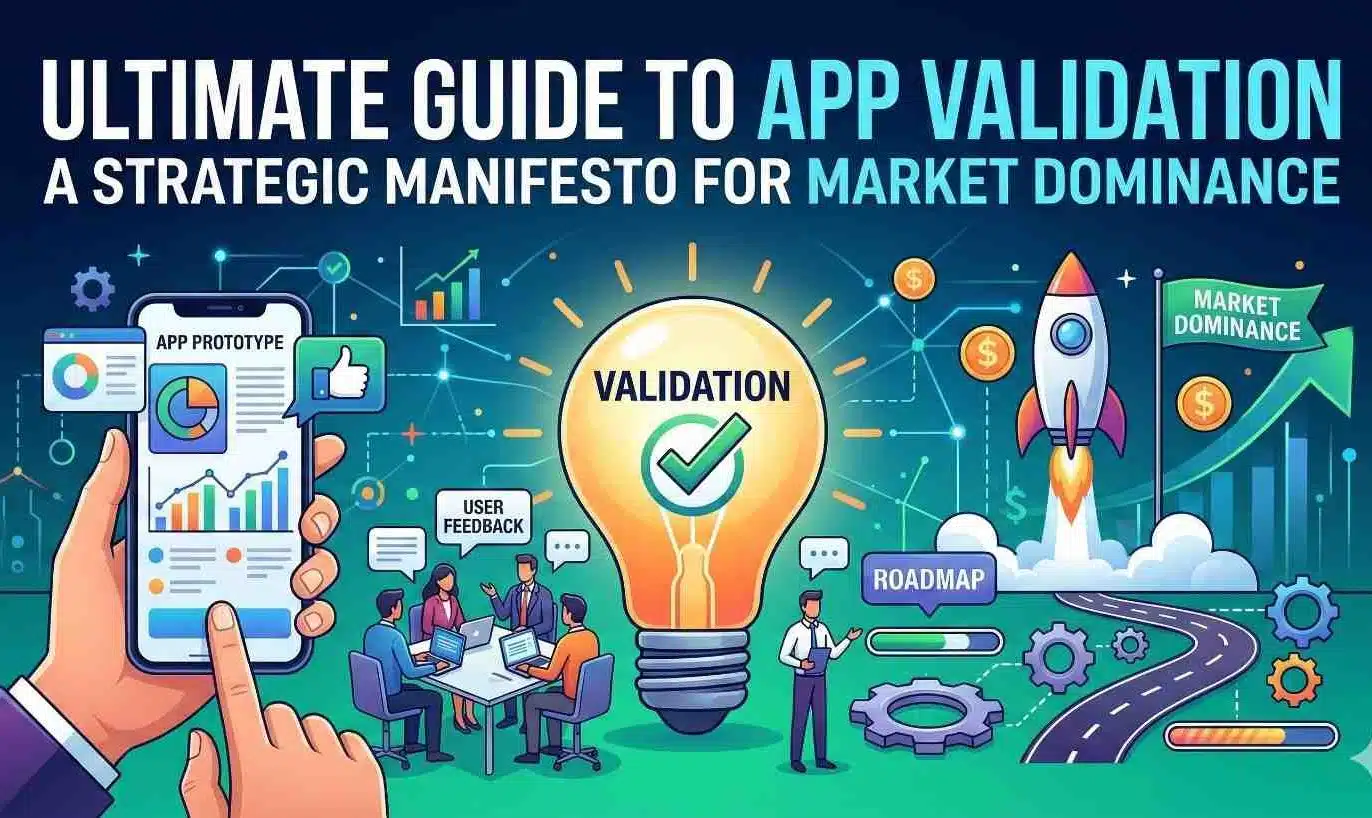
In the high-velocity technology corridor of Austin, Texas the Silicon Hills the distance between a brilliant idea and a market failure has never been shorter or more treacherous. As the tech epicenter of Texas with over 5,500 startups and a specialized workforce of 138,000 tech professionals, Austin has matured into a global hub for Physical AI and Deep Tech, anchored by the multi-billion dollar footprints of Tesla, Apple, and Samsung. As we navigate the complexities of 2026, the global mobile app market is projected to hit a valuation of 391.3 billion, while broader forecasts including in-app advertising suggest a total revenue closer to 633 billion. Yet, despite this massive financial opportunity, the graveyard of failed ventures is more crowded than ever; statistically, approximately 90% of global startups fail at some point in their lifecycle, with 20% to 21% collapsing within the first 12 months a phenomenon known as the Sophomore Slump where initial capital often evaporates before product-market fit is secured. This brutal reality is even more pronounced for the 63% of tech businesses that shutter within five years, often the victims of building solutions for problems that the market simply didn’t ask for.
At Softix, our Think Softix philosophy serves as a corrective to the build-first, ask-questions-later mentality that has claimed so many ambitious ventures. We operate as a strategic technology partner, not just a development shop. We believe that true engineering excellence begins with the courage to invalidate an idea before the market does it for you.
By integrating world-class custom software development with a data-backed SaaS product strategy, we help founders transform high-risk hypotheses into scalable digital assets. This manifesto provides the comprehensive, multi-dimensional framework needed to validate your digital product for the 2026 landscape, ensuring your investment is protected by real-world evidence.
Phase 1: The Seven Core Signals of Product-Market Fit
Validation is a scientific process of seeking disproof. If your idea cannot survive these seven checkpoints, it is unlikely to survive a competitive market launch.
1. The High-Pain Problem Signal (The “Painkiller” Test)
The primary driver of startup failure accounting for 42% of all collapses is a lack of genuine market need. Successful applications in 2026 must be “painkillers,” not “vitamins.” A “vitamin” offers a nice-to-have convenience; a “painkiller” addresses a high-priority problem characterized by extreme user frustration, significant wasted time, or direct financial loss.
- Founder’s Risk: If your target audience identifies the problem as a “mild inconvenience,” the cost of user acquisition (CAC) will likely exceed the lifetime value (LTV) of the customer, leading to an unviable business model.
- The Softix Standard: We look for “hair-on-fire” problems where users are actively searching for a solution today. If there is no search intent, there is rarely a market.
2. The Evidence of “Clunky” Workarounds
Real demand is often hidden in the “duct-tape” solutions people use to get by. If your potential users are managing complex business operations through manual Slack channels, fragmented Excel spreadsheets, or “MacGyvered” Google Sheets, you have identified a massive market gap.
- Why it matters: These workarounds are proof that the need is so urgent that users are willing to tolerate a poor experience just to achieve a result. Your goal is to replace this friction with a specialized, automated workflow.
3. Defining the “Job to Be Done” (JTBD)
You must define exactly what the user is “hiring” your app to do. A user doesn’t just hire a CRM; they hire a solution to “ensure no high-value lead falls through the cracks during a 12-month sales cycle.”
- Strategic Application: At Softix, we use the JTBD framework during our Requirement Gathering phase to ensure every line of code serves a specific business outcome, rather than just adding “feature bloat.”
4. The 10-Strangers Validation Rule
Validation cannot happen within your “circle of trust.” Friends and family are emotionally invested in your success, not your business model; their feedback is often a “polite lie” that masks critical flaws.
- The Process: You must conduct unbiased, deep-dive conversations with at least $10$ individuals who experience the pain point daily but have no personal connection to you. If these strangers confirm the problem’s severity, you have moved from a “hunch” to a “hypothesis.”
5. The 10-Second Clarity Pitch
In a world of information overload, clarity is your primary competitive edge. If you cannot explain the core value of your product in a single, simple sentence, you do not understand the problem deeply enough.
6. High-Intent Smoke Testing (The Landing Page Test)
A “like” on social media or a verbal compliment is worth exactly 0 in revenue. Real validation requires a “Smoke Test” that measures intent through action.
- How to execute: Create a high-fidelity landing page with a “Buy Now” or “Start Subscription” button. When a user clicks, they are notified that the product is in private beta. The click itself is a high-intent data point that proves willingness to pay.
- Data Metric: A healthy landing page conversion rate (CVR) in 2026 is approximately 6.6%, with elite performers exceeding 10.45%.
7. Financial Commitment (The Pre-Order Signal)
The ultimate form of validation is a financial transaction. Whether it is a “presale,” a deposit, or a non-binding Letter of Intent (LOI) in B2B contexts, proving that users will open their wallets is the only way to confirm your solution is a “must-have.”
Phase 2: Advanced 2026 Validation Technologies
The landscape of 2026 offers tools that allow us to validate ideas with a speed and precision that was previously impossible.
Synthetic Persona Simulations
We no longer wait weeks for traditional focus groups. Using advanced AI models, we can create “Synthetic Personas” AI simulations of your Ideal Customer Profile (ICP) to stress-test your value proposition.
- The Benefit: This allows us to process millions of data points from industry sentiment to competitor reviews to identify hidden pain points in seconds. While it doesn’t replace human interviews, it provides a “pre-validated” roadmap that makes human research 10 times more effective.
The Shift to Agentic AI Systems
In 2026, simple chatbots are legacy technology. The market now demands Agentic AI systems capable of autonomous decision-making to simplify complex operations.
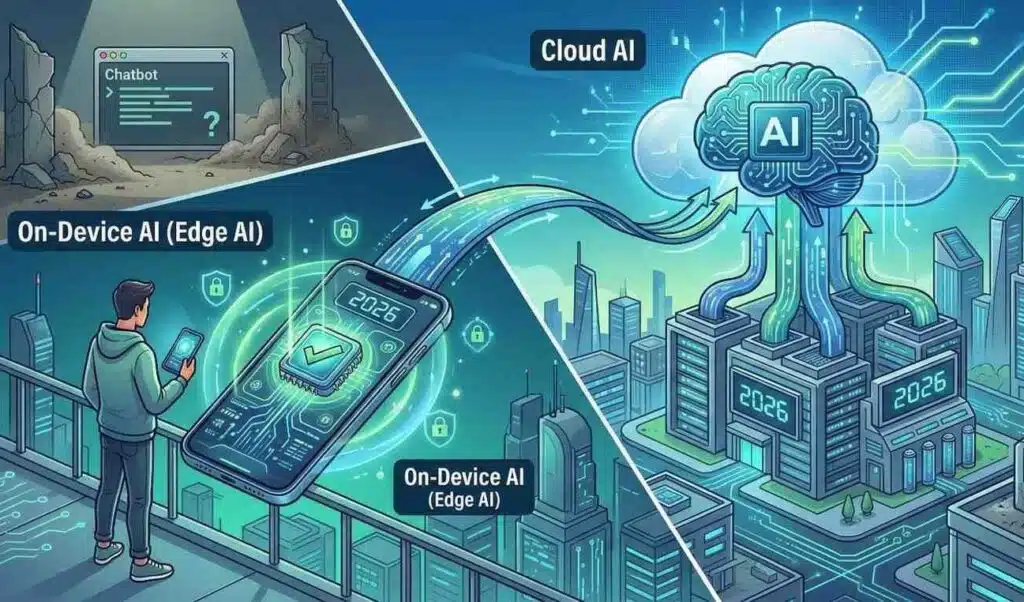
Edge AI vs. Cloud AI Architecture
A critical architectural decision for 2026 is choosing where your AI “thinks.”
- On-Device AI (Edge AI): Offers faster response times and enhanced privacy protection critical trust signals for modern users.
- Cloud AI: Provides superior computational power for complex data processing but requires robust security and higher latency.
Phase 3: The Mom Test 2.0 – Behavioral Interview Framework
To cut through “polite lies,” your research must focus on the user’s past actions, not their future promises.
| Instead of asking… | Ask this instead… | The “Logic” |
| “Would you use an app that did X?” | “How are you dealing with this problem today?” | Past behavior is the only reliable predictor of future action. |
| “How much would you pay for this?” | “How much does this problem cost you right now in time or money?” | Understand their “financial worldview” and existing budget anchors. |
| “Do you think this is a good idea?” | “Talk me through the last time this problem occurred.” | Opinions are cheap; workflows reveal the true “points of friction.” |
| “Would you buy this?” | “What have you already tried to find a solution? What failed?” | If they haven’t googled for a fix, they aren’t in enough pain to pay. |
The Red Flag: If a user mentions “I usually” or “I might,” they are giving you “fluff.” Dig for specifics: “When did it last happen? Walk me through it.”
Phase 4: 2026 Industry Benchmarks and Financial Realities
Understanding your industry’s unique metrics is essential for setting realistic expectations with investors and stakeholders.
Success Rates and Timelines by Sector
| Industry | Success Rate | Avg. Time to PMF | Avg. Launch Cost |
| SaaS (B2B) | 62% | 10–14 Months | 50,000 – 150,000 |
| FinTech | 58% | 12–18 Months | 100,000 – 500,000 |
| HealthTech | 55% | 14–24 Months | 150,000 – 1,000,000 |
| E-commerce | 48% | 6–12 Months | 20,000 – 80,000 |
| Mobile App (B2C) | 35% | 8–16 Months | 30,000 – 100,000 |
Critical Performance Metrics for 2026
- LTV:CAC Ratio: You should aim for an LTV:CAC of at least 3:1. Healthy SaaS businesses often reach 4:1 or higher.
- Retention Benchmarks: Day 1: 20 – 40% (Good); Day 7: 10-20% (Solid); Day 30: 5-10% (Elite).
- The “Rule of 40”: For growth-stage startups, your combined growth rate and profit margin should exceed 40%.
Phase 5: The Softix Lifecycle – From Validation to Scalable Reality
Once your idea has survived the validation gauntlet, our Austin-based engineering team steps in to build the “Soul of the Software.” We follow a rigorous 5-Stage Agile Development Process designed to minimize technical debt and maximize speed-to-market:
- Requirement Gathering: We transform your validation data and customer insights into a high-fidelity technical architecture. We don’t just build features; we build solutions to the pain points identified in your research.
- User-Centered UI/UX Design: In 2026, first impressions are formed in just $50$ milliseconds. We apply product psychology and human-centric design to ensure your app is not just functional, but intuitive and “loved.”
- Engineering & Development: Our Austin-based developers build secure, scalable, and high-performance code tailored to your brand. We specialize in native and cross-platform mobile solutions, custom CRMs, and enterprise-grade SaaS platforms.
- Quality Assurance (QA) & Testing: We perform rigorous functional, performance, and security testing (including HIPAA and GDPR compliance) to ensure your “heartbeat” is stable before launch.
- Deployment & Continuous Optimization: We launch your product and maintain a continuous feedback loop. We use real-time analytics to identify drop-off points and iterate weekly to improve retention.
The Softix Portfolio of Excellence
Our methodology delivers measurable, high-impact results for brands:
- Gunnar: Achieved a +500% increase in monthly sessions and a +90% conversion rate through strategic design.
- AQ Lightning: Realized a +187% conversion rate by optimizing the digital user journey.
- Joshua Legal: Saw a +200% increase in organic search traffic via tailored content strategy.
Conclusion: Turning Ideas into Market-Leading Assets
The custom software landscape of 2026 does not reward those who build the fastest; it rewards those who build the right thing for the right people at the right price. In an era where AI can generate a thousand “generic” products in an afternoon, the only true defense for a founder is a validated strategy executed with technical precision.
Building in a vacuum is the single most expensive mistake a business can make. By grounding your product in the “Think Softix” framework focusing on high-pain problems, technical validation, and behavioral data you transform a risky project into a scalable, fundable asset that can withstand the pressures of a shifting digital economy. The difference between a startup that disappears and one that dominates is the discipline to prove the value before the first line of code is written.
Your Next 90 Days:
- Stop Building: Pause any development that isn’t backed by 10 unbiased human interviews.
- Invalidate: Try to find the “kill switch” for your idea today find the reason it might fail before your competitors do.
- Partner: Contact Softix for a strategic consultation.
Let’s evaluate your app’s trajectory and build a digital future that isn’t just “functional,” but dominant in the Silicon Hills and beyond.
Share