
The digital landscape is in a perpetual state of acceleration. A decade ago, a website that loaded in five seconds was acceptable. Five years ago, the industry mantra became “under three seconds” to capture mobile traffic. Today, those benchmarks are obsolete histories. We have entered an era where user patience is measured not in seconds, but in milliseconds.
This shift isn’t just about catering to impatient users; it is a fundamental changing of the guard in Search Engine Optimization (SEO), driven by Google’s relentless focus on User Experience (UX). The introduction and subsequent tightening of Google’s Core Web Vitals (CWV) metrics have made one thing abundantly clear: page speed is no longer just a technical “nice-to-have.” It is the new battlefield upon which search rankings are won or lost.
In the current digital ecosystem, “fast” is no longer fast enough. The new standard for competitive websites is “sub-second” performance the ability for a page to load and become interactive almost instantaneously. Businesses that fail to adapt to this hyper-speed reality aren’t just frustrating their visitors; they are actively signaling to search engines that their websites are unworthy of top-tier rankings. This article examines why the goalposts have moved and how sub-second speed has become the definitive metric for SEO success.
The Evolution of Speed: From Ranking Boost to Critical Requirement
To understand the urgency of the current moment, we must contextualize how Google views speed. Historically, site speed was a minor ranking signal used primarily to penalize the absolute slowest sites on the web. If your site was functionally usable, speed rarely made or broke your SEO strategy compared to backlinks or content relevance.
The paradigm shifted with the mobile revolution. As global internet usage tipped heavily toward smartphones operating on variable cellular networks, the desktop-centric view of performance became a liability. Google realized that traditional metrics didn’t capture what a user actually felt when visiting a site. A page might technically be “loaded” in two seconds, but if the user couldn’t click a button for another five seconds because heavy JavaScript was executing in the background, the experience was poor.
This realization led to the development of Core Web Vitals a set of specific factors that Google considers important in a webpage’s overall user experience. They shifted the focus from mere connectivity speed to perceived user experience speed. With recent updates, Google has baked these metrics directly into its ranking algorithms. Today, a slow site isn’t just a slow site; it’s an inferior product in the eyes of the world’s largest search engine. The battlefield has moved from simply having content to delivering that content faster than anyone else.
Defining the New Standard: Understanding the Core Web Vitals
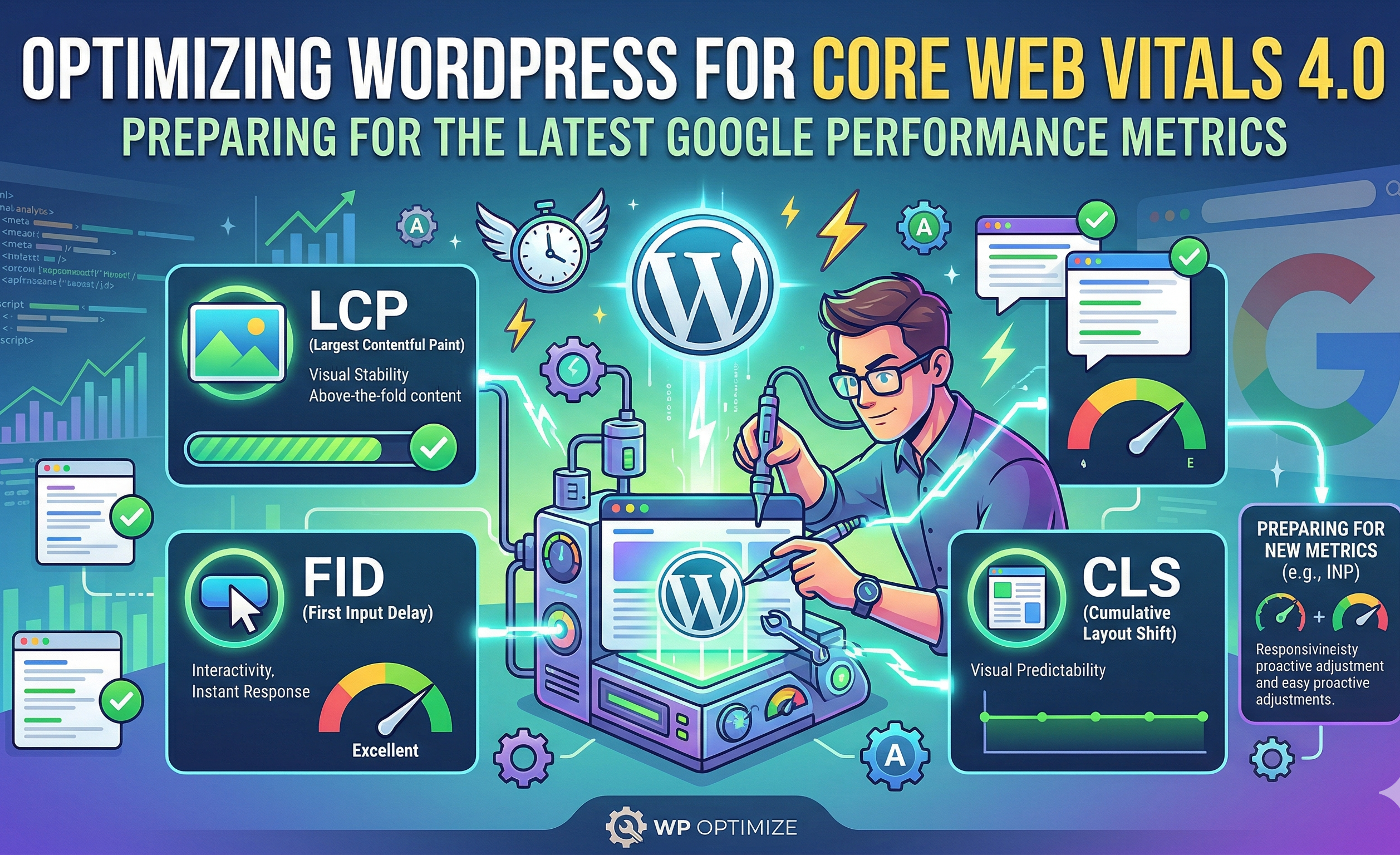
Core Web Vitals are distinct from generic speed tests because they measure distinct pillars of the user experience: loading performance, interactivity, and visual stability. They are the quantifiable metrics Google uses to answer the question, “Is this page delightful to use?” To thrive in the modern search landscape, one must understand what these metrics represent.
The three pillars are Largest Contentful Paint (LCP), which measures how quickly the main content of a page loads; Interaction to Next Paint (INP), which has largely replaced First Input Delay (FID) to measure how quickly a page responds to a user’s click or tap; and Cumulative Layout Shift (CLS), which measures visual stability and whether elements jump around during loading.
Achieving “green” scores on these metrics is incredibly difficult for legacy websites bloated with years of unoptimized code and large media files. Because the technical bar has been raised so high, comprehensive SEO Services now prioritize deep-dive technical performance audits and server-side optimizations just as highly as traditional content creation and link building. Without a technically sound, high-performance foundation that satisfies these specific metrics, traditional on-page SEO efforts are often rendered ineffective because users bounce before they even see the content.
The “Sub-Second” Imperative: The Psychology of Instant
Why is the industry pushing toward sub-second load times? Is the difference between 0.8 seconds and 1.5 seconds really that significant? Psychologically and economically, the answer is a resounding yes.
User expectations have been radically reshaped by market leaders outside of the standard web ecosystem. Platforms like TikTok, Instagram, and native mobile applications provide near-instantaneous gratification. Content loads the moment it is requested. When a user transitions from an instant-load app to the mobile web and encounters a two-second white screen, the psychological friction is immense. This “wait” triggers immediate frustration.
Studies on cognitive load and human-computer interaction suggest that delays as short as 100 milliseconds are perceived by the brain. Delays extending beyond one second interrupt the user’s flow of thought. In an e-commerce context, this interruption is catastrophic.
Every millisecond of latency bleeds revenue. Amazon famously found that every 100ms of latency cost them 1% in sales. In today’s hyper-competitive environment, where a competitor is just a back-click away, a site that takes three seconds to become interactive is essentially inviting its traffic to leave. The sub-second standard aims to remove that friction entirely, making the website feel like a natural extension of the user’s thought process, rather than a hurdle they must overcome.
The Technical Frontier: Achieving Instantaneous Performance
Moving from a “acceptable” three-second load time to a sub-second load time requires a complete rethinking of website architecture. It is rarely achieved through simple plugin adjustments or basic image smushing. It requires moving the entire technical stack toward the “edge.”
To achieve sub-second speed, the physical distance between the server and the user must be minimized. This has led to the rise of advanced Edge Computing and next-generation Content Delivery Networks (CDNs). Instead of serving a website from a single server in Northern Virginia to a user in Tokyo, critical HTML, CSS, and JavaScript are cached on servers located in Tokyo, drastically reducing latency.
Furthermore, the assets themselves must be fundamentally modernized. Legacy image formats like JPEG and PNG are being replaced by AVIF and WebP, which offer superior quality at a fraction of the file size.
Perhaps the biggest technical hurdle to sub-second speed is JavaScript execution. Modern websites are overly reliant on heavy external scripts for analytics, chat bots, and tracking pixels. These scripts block the main thread of the browser, delaying interactivity (and harming the INP metric). Achieving sub-second speed often requires ruthless prioritization of scripts, delaying non-essential code until after the user has begun interacting with the page.
Conclusion: Speed is the Gatekeeper
The introduction of Core Web Vitals was not a temporary hurdle to clear; it was a signal of a permanent change in the digital ecosystem. Google’s objective is to organize the world’s information and make it universally accessible and useful. A slow website is inherently not useful to a modern mobile user.
The new SEO battlefield isn’t just about keywords; it’s about velocity. The companies that dominate search results in the coming years will be those that treat performance as a primary feature of their brand, investing in the infrastructure required to deliver sub-second experiences globally. In this new reality, speed is the gatekeeper to visibility, and only the fastest will pass through.