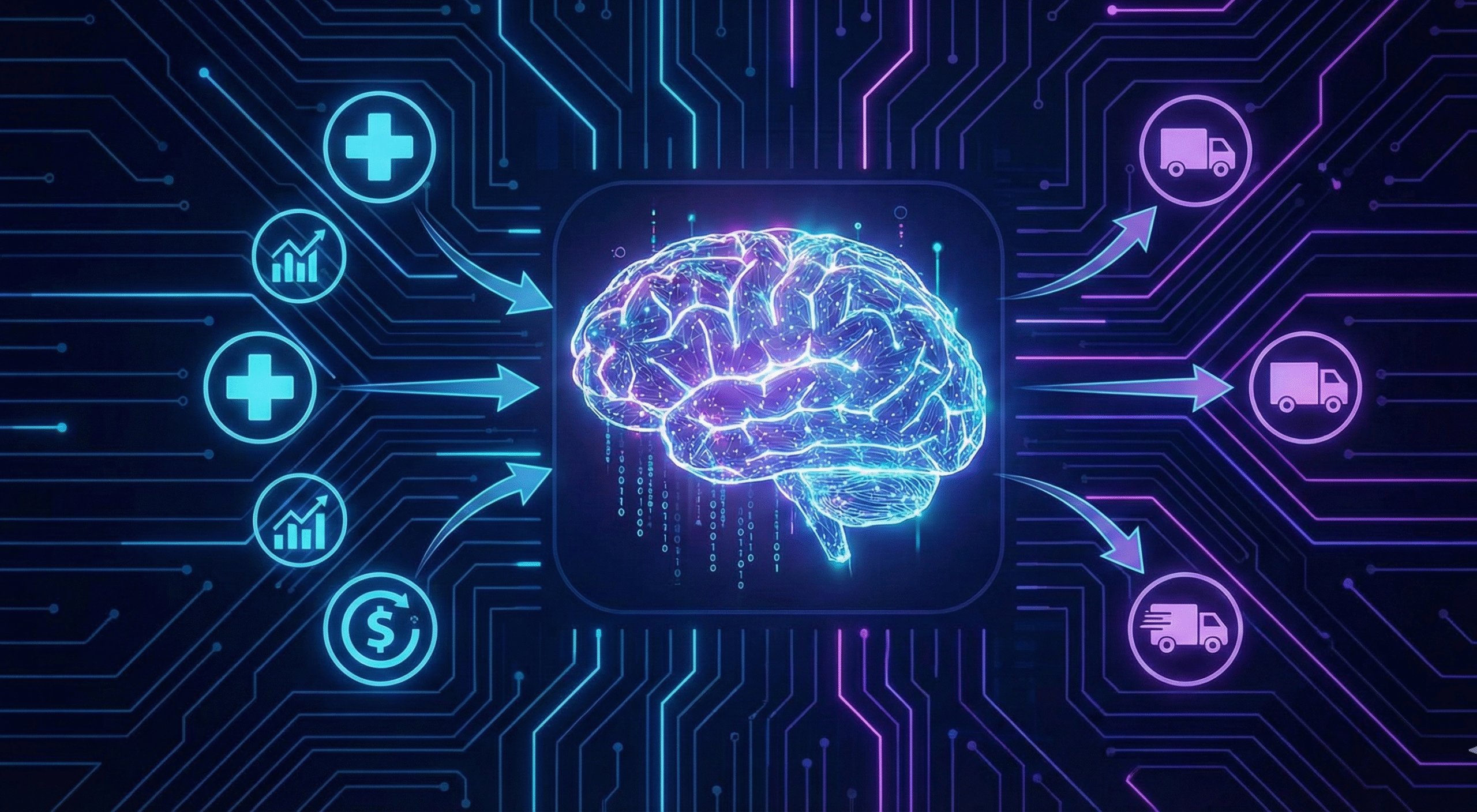
Artificial Intelligence (AI) is no longer a futuristic concept locked behind the doors of science fiction or academic laboratories. It is the engine driving the modern global economy. Experts predict AI will contribute an estimated $15.7 trillion to the global economy by 2030, reshaping industries from healthcare to logistics. Whether it is a recommendation engine for streaming services, a fraud detection system for banking, or a predictive maintenance tool for manufacturing, AI is the defining competitive advantage of this era.
However, for many business leaders and developers, the path from “having an idea” to “deploying a functioning AI system” remains shrouded in complexity. Is it just about writing code? Is it about data? How do you ensure it actually solves a business problem?
This guide synthesizes insights from top industry experts to provide a comprehensive, step-by-step roadmap for building a custom AI system from scratch.
Deconstructing the “Black Box”
What Actually is an AI System?
Before writing a single line of Python, it is vital to understand what you are building. As noted by Phaedra Solutions, an AI system is best understood by comparing it to a human child learning to speak. A child listens (ingests data), attempts to speak (processes), gets corrected by parents (training/feedback), and eventually follows grammatical rules (algorithms).
An AI system is a computer program designed to mimic this human decision-making process. It operates by following strict algorithmic rules and learning from data to improve over time.
The Spectrum of Intelligence
When scoping your project, you must identify which “tier” of AI you are targeting. Most current business applications fall into the first category:
- Artificial Narrow Intelligence (ANI): Often called “Weak AI,” this is the most common form today. These systems are highly skilled at one specific task such as recognizing faces in a photo or filtering spam emails but cannot perform outside that narrow scope.
- Artificial General Intelligence (AGI): This is the theoretical “Strong AI” that possesses human-level cognitive abilities, capable of solving unfamiliar tasks across different domains. While Large Language Models (LLMs) display hints of this, true AGI remains a developmental goal.
- Artificial Superintelligence (ASI): A future concept where AI surpasses human intellect in creativity, wisdom, and social skills.
The Building Blocks
To build these systems, you will rely on specific technological sub-fields:
- Machine Learning (ML): The practice of using algorithms to parse data, learn from it, and make a determination without being explicitly programmed for that specific outcome.
- Deep Learning (DL): A subset of ML inspired by the human brain’s neural networks. It is essential for complex tasks like image recognition and natural language processing.
- Natural Language Processing (NLP): The bridge between computers and human language, enabling systems to read, decipher, and understand text and speech.
The Strategic Phase
Defining the Purpose and Feasibility
According to NineTwoThree, one of the most common reasons AI projects fail is a lack of clear purpose. Approximately 85% of AI projects stagnate because the goals are vague. Before technical development begins, you must answer critical business questions:
- What is the specific pain point? Are you trying to automate a tedious manual process, predict customer churn, or analyze sentiment?
- Is AI the right tool? Not every problem requires a neural network. Sometimes, simple statistical analysis is sufficient.
- Is the data available? AI requires fuel. If you do not have access to high-quality, relevant data, your engine cannot run.
Custom vs. Off-the-Shelf
A critical decision point is whether to buy an existing solution or build a custom one. While generic tools exist, they often fail to integrate seamlessly into unique enterprise workflows. A Custom AI Solution is tailored to your specific objectives, optimizing performance for your unique datasets and providing a distinct competitive edge that off-the-shelf software cannot match.
The Technical Roadmap (Step-by-Step)
Once the strategy is set, the development lifecycle begins. Integrating methodologies from Simform, iMark Infotech, and Litslink, here is the 8-step technical process.

Step 1: Data Collection (The Fuel)
Data is the cornerstone of any AI model. The sophistication of your algorithm matters little if your data is poor. This phase involves gathering raw data from various sources:
- Internal Sources: CRM records, transaction logs, sensor data.
- External Sources: Public datasets, government repositories, or social media scraping.
- Crowdsourcing: Using platforms to gather diverse inputs if internal data is scarce.
Step 2: Data Preparation and Cleaning
Real-world data is “messy.” It contains duplicates, missing values, and errors. This is often the most time-consuming phase, yet it is non-negotiable.
- Cleaning: Removing outliers and duplicates.
- Labeling: If you are building a supervised learning model (like image recognition), humans must label the data so the AI knows what it is looking at.
- Normalization: Scaling numerical data to a consistent range so the model can learn efficiently.
- Splitting: You must divide your data into three sets: Training (to teach the model), Validation (to tune it), and Testing (to evaluate it).
Step 3: Selecting the Tech Stack
You need the right tools for the job. The industry standard language for AI is Python, favored for its simplicity and vast library ecosystem.
- Frameworks: TensorFlow, PyTorch, Keras, and Scikit-learn are the most popular frameworks for building and training models.
- Infrastructure: AI training is computationally expensive. You will likely need high-performance GPUs, accessed either locally or via cloud providers like AWS, Google Cloud, or Microsoft Azure.
Step 4: Algorithm Selection and Architecture Design
This is the “blueprint” phase. You must choose the algorithm that fits your problem:
- Regression: Best for predicting continuous values (e.g., predicting next month’s sales revenue).
- Classification: Best for sorting data into categories (e.g., “Fraud” vs. “Legitimate” transaction).
- Clustering: Used for finding hidden patterns in data without predefined labels (e.g., customer segmentation).
- Neural Networks: Required for high-complexity tasks like voice recognition or computer vision.
Designing the architecture involves defining the layers—Input Layers (receiving data), Hidden Layers (processing patterns), and Output Layers (delivering results).
Step 5: Training the Model
This is where the magic happens. You feed your training data into the chosen algorithm. The model processes the data, makes a guess, compares it to the actual answer, and adjusts its internal parameters (weights) to minimize the error.
- Hyperparameter Tuning: During training, developers adjust settings like the “learning rate” (how fast the model adapts) and “batch size” to optimize performance. This is an iterative process often requiring significant computing power.
Step 6: Evaluation and Testing
Once trained, the model must be rigorously tested using data it has never seen before (the Test Set). You cannot simply ask, “Does it work?” You must use specific metrics:
- Accuracy: The overall percentage of correct predictions.
- Precision and Recall: Vital for imbalanced datasets. For example, in cancer detection, high Recall (catching all cases) is more important than pure accuracy.
- F1 Score: A harmonic mean of precision and recall, providing a balanced view of performance.
Step 7: Deployment and Integration
An AI model sitting on a developer’s laptop provides no business value. Deployment involves integrating the model into a production environment. This usually involves:
- API Creation: Wrapping the model in an API so that other software applications (web apps, mobile apps) can send data to it and receive predictions.
- Containerization: Using tools like Docker to ensure the model runs consistently across different computing environments.
- User Interface (UI): Building a front-end that allows non-technical staff to interact with the AI insights.
Step 8: Monitoring, Maintenance, and Scaling
Deployment is not the finish line. AI models suffer from a phenomenon known as Model Drift. As the real world changes, the data the AI encounters changes, and its predictions become less accurate.
- Continuous Monitoring: You must track performance metrics in real-time.
- Retraining: The model must be regularly updated with new data to remain relevant.
- Scaling: As user demand grows, the infrastructure must scale. This is where cloud-based auto-scaling becomes essential to handle spikes in traffic.
Navigating the Challenges
Building an AI system is fraught with hurdles. Simform and Litslink highlight several key challenges that every organization must mitigate:
1. Data Integrity and Security
The phrase “Garbage in, Garbage out” is the mantra of AI. If your training data is biased, your AI will be biased. Furthermore, as AI systems often handle sensitive customer data, robust encryption and adherence to regulations like GDPR are mandatory.
2. The “Black Box” Problem (Explainability)
Deep learning models are often opaque; it is difficult to understand why they made a specific decision. In industries like finance or healthcare, “because the computer said so” is not an acceptable answer. developers must strive for Explainable AI (XAI) to ensure trust and regulatory compliance.
3. Computational Costs
Training complex models requires massive processing power. Cloud costs can spiral out of control if not managed properly. Organizations must balance performance needs with budget constraints, optimizing code to run efficiently.
4. Ethical Concerns and Bias
AI can inadvertently perpetuate societal biases found in historical data. For instance, a hiring AI trained on past resumes might discriminate against certain demographics if the historical hiring data was biased. Establishing “Governance Guardrails” and ethical review boards is a best practice for modern AI development.

Future Trends and Strategic Outlook
As we look toward the next horizon of technology, the capabilities of AI systems continue to expand.
- AI + IoT: The integration of AI with the Internet of Things (IoT) is creating “smart” environments where devices not only collect data but make real-time decisions from autonomous drones to smart manufacturing floors.
- Healthcare Revolution: AI is moving from administrative tasks to core diagnostics, aiding in drug discovery and personalized medicine plans.
- Democratization of AI: Tools are becoming more accessible, allowing smaller teams to build custom solutions without needing a massive team of data scientists.
Conclusion
Creating an AI system is a journey that requires a blend of strategic vision, technical rigor, and ethical responsibility. It is not merely a software update; it is a fundamental shift in how an organization processes information and makes decisions.
By following a structured path defining clear goals, curating high-quality data, choosing the right architecture, and committing to continuous monitoring businesses can build custom AI solutions that are not just functional, but transformative. The barrier to entry has never been lower, but the ceiling for innovation has never been higher. The time to start building is now.