

Why User Experience Now Determines Digital Growth
A website can have valuable information, strong keywords, and even a solid SEO strategy, yet still fail to perform. The reason is often overlooked. Users rarely leave because the content is irrelevant; they leave because interacting with it feels difficult, slow, or confusing.
In 2026, digital success is increasingly shaped by how effortlessly users can move through an experience. When navigation feels unclear or information takes too long to process, users disengage almost instantly. This behavior sends strong signals to search engines, which now rely heavily on user interaction data to evaluate content quality.
As a result, user experience has moved beyond aesthetics and usability. It has become a critical factor in determining whether a platform retains attention, builds trust, and maintains visibility in search results. A well-structured experience not only supports user goals but also strengthens the overall performance of digital content.
This article explores the core user experience principles that influence how people interact with digital platforms and how those interactions ultimately shape growth, engagement, and long-term success.
Understanding Users as the Foundation of Design
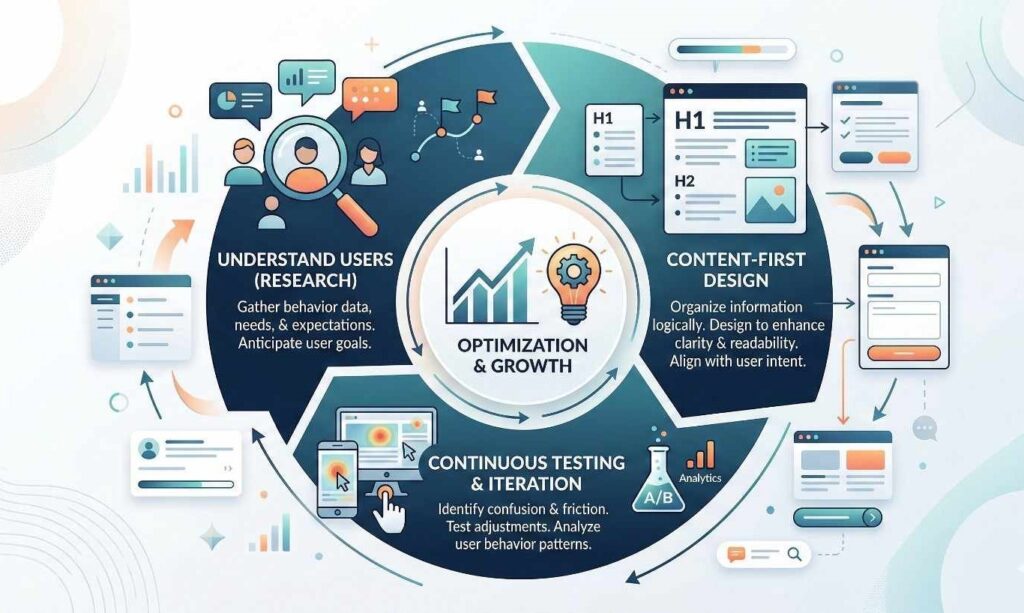
Every successful digital product begins with a clear understanding of its users. Rather than designing based on assumptions or trends, effective user experience is rooted in real human behavior, needs, and expectations. When designers fail to align with user intent, even the most visually appealing interface can become ineffective.
Users interact with digital platforms with specific goals in mind. Whether they are searching for information, completing a purchase, or exploring a service, their expectations shape how they evaluate the experience. A design that anticipates these expectations reduces friction and creates a sense of ease.
When user needs are deeply understood, the resulting experience becomes intuitive. Navigation feels natural, content becomes more relevant, and engagement increases organically. This alignment not only improves usability but also strengthens the overall effectiveness of digital platforms.
The Role of Continuous Testing in UX Improvement
User experience is not a one-time effort but an ongoing process of refinement. Even well-designed interfaces can contain points of confusion or inefficiency that are only revealed through real-world interaction. Continuous testing allows these issues to surface and provides opportunities for improvement.
When users interact with a website or application, their behavior offers valuable insights into what works and what does not. Patterns such as early exits, hesitation during navigation, or incomplete actions indicate areas where the experience can be enhanced. Addressing these issues leads to smoother interactions and increased user satisfaction.
Over time, consistent testing and iteration create a more refined product. Small adjustments can significantly impact engagement, making the platform more effective without requiring major structural changes.
Why Content Should Guide Design Decisions
One of the most overlooked aspects of user experience is the relationship between content and design. In many cases, design is prioritized first, with content added later to fit within predefined layouts. This approach often leads to inconsistencies and reduces the effectiveness of both elements.
When content is treated as the foundation, design becomes a tool to enhance clarity and readability rather than a constraint. This ensures that information is presented in a way that aligns with user intent and supports natural engagement. Well-structured content allows users to quickly understand key messages and navigate information efficiently.
A content-first approach also improves search visibility. When information is organized logically and presented clearly, it becomes easier for both users and search engines to interpret. This alignment strengthens the overall performance of the platform.
Designing for Limited Attention Spans
Digital users operate in an environment filled with constant distractions. As a result, attention spans have become significantly shorter. This shift has changed how content and interfaces must be designed.
Users rarely read content word for word. Instead, they scan for relevant information, looking for cues that guide them toward their goals. If a page appears cluttered or difficult to navigate, users are more likely to leave rather than invest additional time.
Designing for this behavior requires clarity and structure. Information should be presented in a way that is easy to process at a glance. Logical organization, clear headings, and balanced spacing contribute to a more accessible experience. When users can quickly understand what they are seeing, they are more likely to stay engaged.
The Importance of Simplicity and Consistency
Simplicity is one of the most powerful principles in user experience design. When interfaces are overly complex, users are forced to think more about how to interact with them. This additional effort creates friction and increases the likelihood of abandonment.
A simple design removes unnecessary elements and focuses on what truly matters. It guides users toward their objectives without overwhelming them with options. Consistency further enhances this clarity by ensuring that similar elements behave in predictable ways throughout the platform.
When users feel confident in how a system works, they are more likely to continue interacting with it. This sense of familiarity builds trust and contributes to a more positive overall experience.
Leveraging Familiar Design Patterns
Users bring prior experiences with them when interacting with new platforms. They have developed expectations based on commonly used interfaces and design patterns. Leveraging these familiar elements reduces the learning curve and allows users to navigate more efficiently.
When an interface behaves in a way that aligns with established patterns, users can rely on intuition rather than conscious effort. This creates a smoother interaction and minimizes confusion. Attempting to introduce entirely new or unconventional patterns may seem innovative, but it often results in usability challenges.
By aligning with familiar structures, designers can create experiences that feel natural from the first interaction. This approach enhances usability and supports long-term engagement.
The Growing Importance of Mobile-First Design
The shift toward mobile usage has fundamentally changed how digital experiences are designed. A significant portion of users now access websites and applications through mobile devices, making mobile-first design a critical consideration.
Mobile environments present unique challenges, including smaller screens, touch-based interactions, and varying network conditions. These factors require a more focused and streamlined approach to design. Content must be easily accessible, navigation must be intuitive, and performance must remain consistent across devices.
A well-optimized mobile experience not only improves usability but also influences search visibility. Search engines prioritize mobile-friendly platforms, making this aspect essential for maintaining and improving rankings.
Reducing Friction by Minimizing User Effort
Every interaction within a digital platform requires some level of effort from the user. When this effort becomes excessive, it creates friction that can lead to frustration and abandonment. Reducing this friction is a key objective of effective user experience design.
Simplifying processes such as sign-ups, form submissions, and navigation helps create a more seamless journey. When users can complete actions quickly and without unnecessary steps, they are more likely to continue engaging with the platform.
This principle extends beyond functionality to include clarity of communication. Clear instructions, logical flows, and intuitive interfaces all contribute to reducing the cognitive load placed on users.
Creating Experiences That Encourage Return Visits
Attracting users is only the first step in building a successful digital presence. Long-term growth depends on the ability to retain users and encourage repeat interactions. This is where user experience plays a crucial role.
An effective experience leaves a lasting impression. When users find value, ease, and satisfaction in their interactions, they are more likely to return. This repeat engagement strengthens the relationship between the user and the platform.
Over time, consistent positive experiences build trust and familiarity. This not only improves retention but also contributes to organic growth through word-of-mouth and increased user loyalty.
The Connection Between UX and SEO Performance
User experience and search engine optimization are no longer separate disciplines. They are deeply interconnected, with each influencing the effectiveness of the other.
Search engines evaluate user behavior as an indicator of content quality. When users engage with a platform, spend time exploring, and return for additional visits, these signals contribute to improved rankings. Conversely, poor user experience leads to disengagement, which negatively impacts visibility.
By focusing on user experience, platforms naturally align with the factors that search engines prioritize. This creates a sustainable approach to growth that does not rely solely on technical optimization.
To Wrap Up: Building for Users First
The digital landscape continues to evolve, but one principle remains constant: success depends on how well a platform serves its users. User experience is no longer just a design consideration; it is a fundamental driver of engagement, visibility, and growth.
By understanding user needs, simplifying interactions, and creating intuitive experiences, digital platforms can achieve lasting impact. These principles not only improve usability but also strengthen the overall effectiveness of SEO strategies.
In 2026 and beyond, the most successful platforms will be those that prioritize users at every stage of the design process. When user experience is treated as a core strategy rather than an afterthought, it becomes a powerful force for sustainable growth.