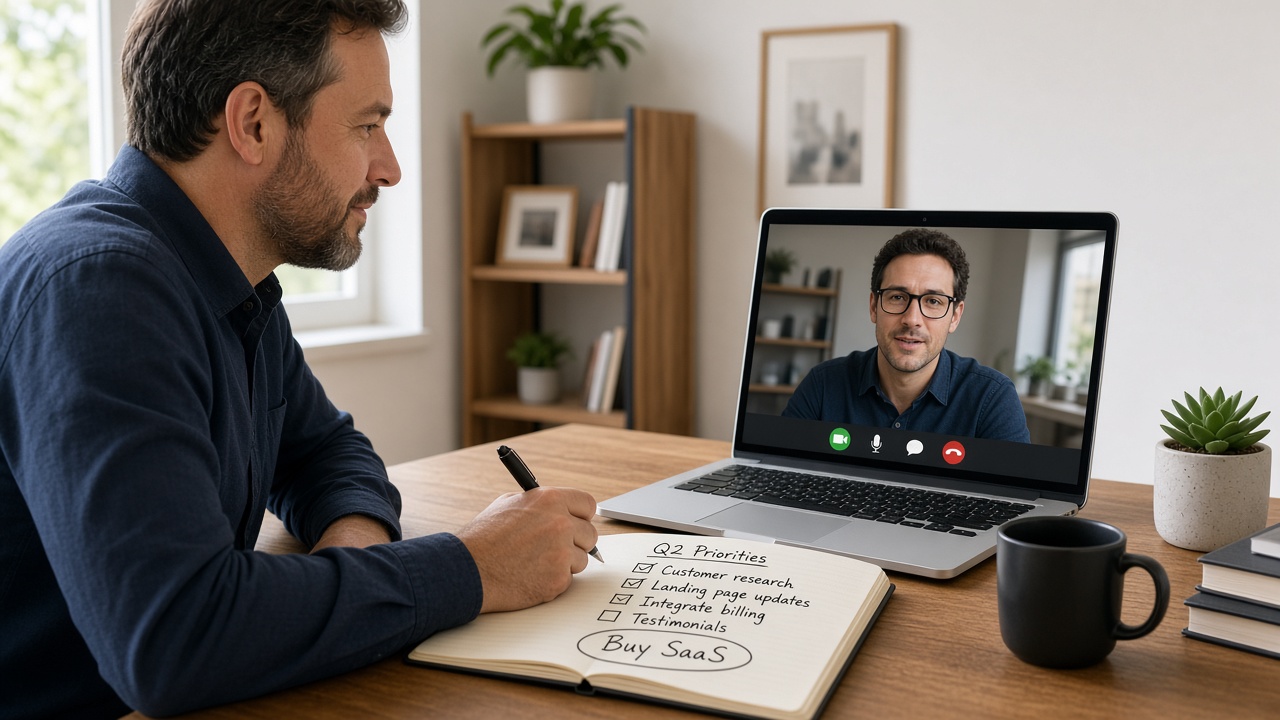
US SMB founders often arrive at Softix already halfway into a custom-software RFP. Someone said the CRM will not stretch. A spreadsheet owner quit. A vendor demo made “build it” sound cheaper than another year of seats. Our job in discovery is not to win that SOW. It is to decide whether a first-release custom system is the honest next step—or whether buy SaaS instead is the right call and we should say so out loud.
This post is for US founders, COOs, and ops leads scoping work with an offshore delivery partner. It is Softix’s refusal playbook: the signals we watch for, the artifacts we require across Pakistan–US timezones, and the lines we will not put in a statement of work just to stay in the deal.
Discovery signals that mean buy SaaS, not a Softix SOW
We do not score “build vs buy” from a vibe. In the first one or two discovery calls we look for concrete signals. Any one of these can be enough to recommend buy; two or more usually ends the custom path for that slice of work.
- The workflow is commodity. Invoicing, basic CRM pipelines, helpdesk queues, payroll-adjacent admin, or a standard booking calendar with no proprietary rules. If a mid-market SaaS already ships 80% of the job and your edge is sales or service—not the software—we say buy.
- You cannot name a system of record. If the “custom app” is really a hope that five tools will magically become one, and nobody will own data quality after launch, a build will not fix that. Buy a primary SaaS and retire the sprawl first.
- Seat growth is the real cost driver. When headcount is climbing and the pain is license math, not a differentiated process, multi-year SaaS still often beats a first release plus maintenance—especially if you lack an internal owner for the product after Softix ships.
- Success equals “looks like the demo.” Custom work fails when the acceptance criteria are screenshots of someone else’s product. That is a buy-and-configure problem, not a build problem.
- Compliance theater without a budget. Requests for “HIPAA/GDPR in the quote” with no policies, no BAAs, and no security owner on your side are a red flag. We will not pretend a six-week MVP is a compliance program. Buy a vendor that already carries the attestations you need, or fund a real security workstream separately.
If you want a planning sketch of Buy vs Build vs Customize dollars before the call, Softix publishes a free Build vs Buy vs Customize calculator. It is optional context—not a substitute for the refusal rules below, and not a Softix quote.
What we refuse to fake in a custom software quote
When the signals point to buy, walking away is the easy part. The harder part is refusing to dress a buy decision as a soft custom SOW. Softix will not:
- Pad a “phase 0 rebuild” that only configures SaaS. If the work is HubSpot fields, Zapier maps, or Shopify theme tweaks, we name it implementation—or we decline—not “custom platform v1.”
- Promise a fixed price without workflow evidence. No recorded happy path, no sample data, no integration list, no named US-side owner → no fixed SOW. We will not invent certainty to match a competitor’s PDF.
- Hide maintenance as a surprise. A first release without an annual maintenance assumption and a hosting/ops line is incomplete. If the founder cannot fund that, buy SaaS.
- Ship without acceptance tests. “We’ll know it when we see it” is not a Softix milestone. If you will not agree pass/fail checks, we recommend buying a product with a vendor roadmap instead of commissioning ours.
- Staff a build when you only need staff-aug for vendor work. Sometimes the honest ask is a Lahore engineer inside your HubSpot or Salesforce instance. We say that. We do not upsell a greenfield repo.
How Softix actually does this
Softix delivers from Building 41, Johar Town, Lahore, for US SMBs. Discovery is timezone-aware on purpose.
- Overlap, not 24/7 theater. We schedule decision calls in the US-morning / Pakistan-evening window so founders and Softix scopes are both awake. Async notes land in a shared doc the same day; we do not sell a fake local office story.
- Artifacts before architecture. Before anyone sketches a custom stack we ask for: current tool list and monthly spend, one recorded workflow (or screenshare), the integration must-haves, who owns the product after launch, and the decision deadline. Missing artifacts pause the SOW; they do not get papered over with assumptions.
- Named owner on both sides. Softix assigns a delivery lead. You assign one US-side owner who can accept or reject milestones. No owner → we recommend buy SaaS and stop.
- Written walk-away. When we recommend buy, you get a short note: which signals fired, which SaaS categories fit, and what Softix would still do if you later need a thin custom slice (owned sync, portal, or reporting) on top of the vendor. That note is the deliverable—not a discounted fake build.
Experience from scoping: the founders who thank us later are the ones who avoided a nine-month custom CRM that cloned Pipedrive with worse mobile. The ones who push for a SOW anyway usually lacked an internal owner; the build would have stalled at UAT with Softix carrying product decisions we should never own.
When buy still leaves room for Softix
Recommending SaaS is not the same as disappearing. After a buy decision we sometimes stay for:
- Light customize or admin setup on a platform you already pay for
- An owned sync instead of Zapier sprawl once the SaaS is chosen
- A narrow customer or partner portal that sits beside the SaaS system of record
Those are scoped as customize or thin custom slices—with clear boundaries—not as “we’ll rebuild everything later.” If the first conversation only makes sense as a full custom system of record, we say that too. Honesty cuts both ways.
Limits and honesty
This playbook is Softix’s discovery practice, not accounting advice and not a guarantee another agency will refuse the same deal. Calculator defaults and any ranges we mention in sales are planning knobs, not quotes. We do not claim awards, North American branch offices, or blanket compliance certifications. If your process truly is the product—and you can fund ownership after launch—we will scope a first release you can ship. If it is not, we will tell you to buy.
Next step
Bring your tool list, monthly SaaS spend, and one painful workflow to a short discovery call. Expect a buy recommendation when the signals say so. When a custom first release is still the right path, Softix scopes it from Lahore with the same refusal rules intact.
Start here: Softix custom software development — or book time at Let’s Talk.
FAQ
Will Softix still quote if discovery says buy SaaS?
We will quote implementation, light customize, or a thin adjacent build if that is what you need. We will not invent a greenfield custom SOW to keep the pipeline warm.
How fast do you decide buy vs build?
Often within one or two overlap calls once artifacts are in hand. If you cannot provide workflows and an owner, we pause rather than guess.
Does “buy SaaS instead” mean Softix will not work with us?
No. It means we will not sell you the wrong shape of work. Many Softix clients start on SaaS and return later for owned sync, portals, or a true first-release system of record.
What timezone should US founders expect?
Decision calls land in US morning / Pakistan evening overlap. Written updates continue async from Lahore the same business day whenever possible.
Is the Softix calculator a quote?
No. The Build vs Buy vs Customize calculator is an educational planning aid. Softix quotes only after discovery with your real constraints.
Softix · Building 41, Johar Town, Lahore · +92 332 6444418 · info@thesoftix.com
Share