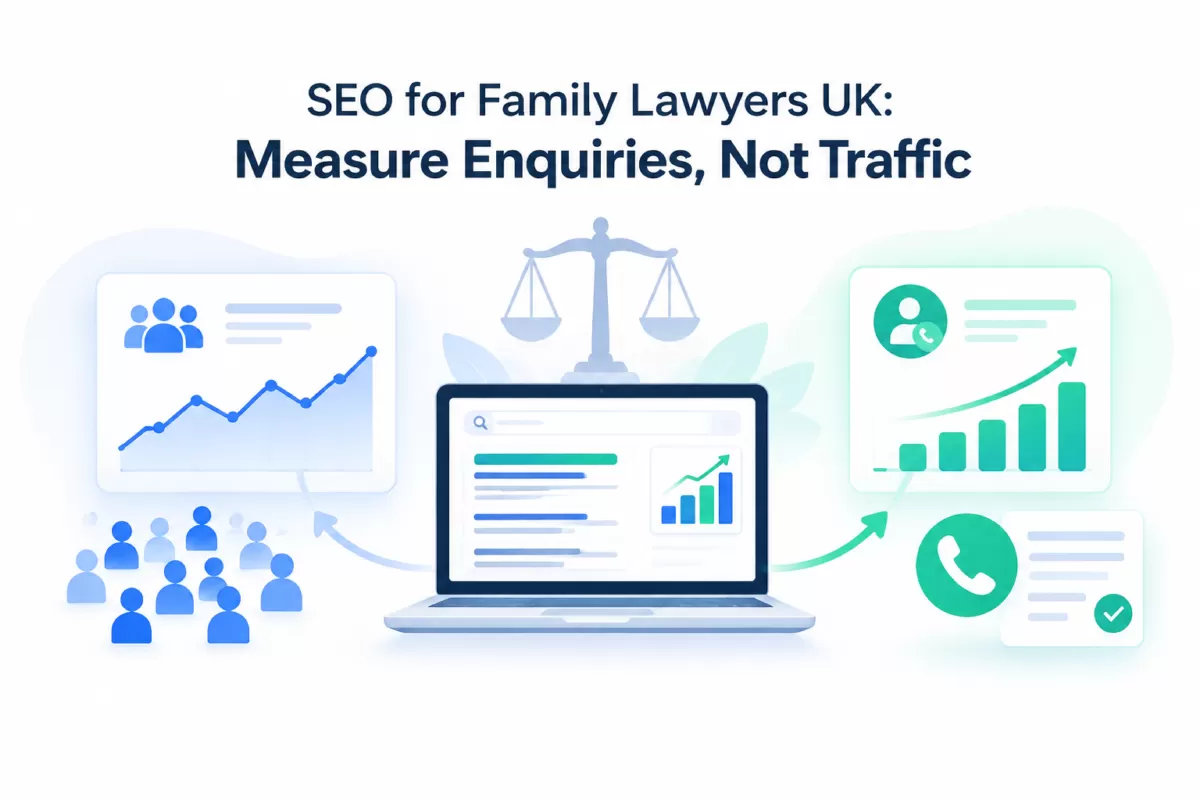
For family law firms in the United Kingdom, local search is not just a contest to appear for more town names. People may search for a solicitor near them, a particular family law service in a nearby city, or help in a place where the firm can genuinely meet with clients. A page for every town in reach may look like a shortcut, but it can leave searchers unsure where the firm works and what it handles.
A useful local SEO plan starts with the firm’s actual coverage, then connects that coverage to clear website information and an accurate Google Business Profile. The aim is to help the right people understand whether the firm may be relevant to them, without implying that it has an office or provides a service somewhere it does not.
How local intent differs from broader SEO for family lawyers
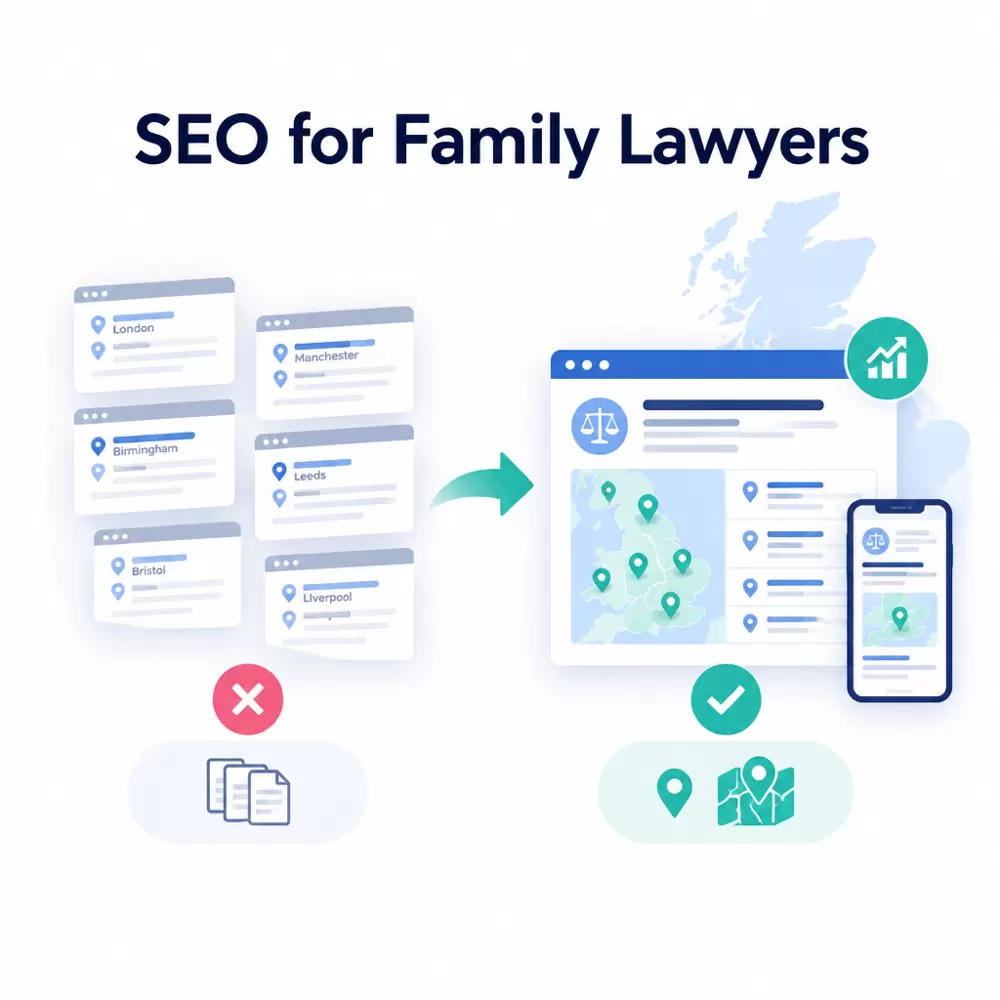
Broader organic search can help a firm appear for informational questions, such as what a family solicitor does or what happens during a legal process. Local searches add a place-based need. Someone might look for a family lawyer near them, or include a town, county, or city in the query because they want to find a firm they can contact or visit.
Those searchers may encounter both standard organic results and the local pack, the map-based group of business listings shown for some searches. These are different parts of the search results. A firm’s website can explain its services and coverage in more detail, while its Google Business Profile can present core business information. Neither should promise visibility or replace the other.
For a family law practice, local intent can also depend on the service. A person looking for help with child arrangements may need a different page from someone searching for a divorce solicitor. A location name alone does not explain whether the firm handles that issue, whether it meets clients there, or whether it serves people from that place remotely.
That is why the first planning question should not be “Which towns should we add?” Ask what the searcher is trying to find, which services the firm offers, and whether there is a genuine connection between that service and the place named. This keeps local SEO focused on useful answers rather than a larger list of keywords.
Define genuine service coverage before choosing locations
Write down the places the firm can substantiate serving before creating location pages or changing profile settings. “Coverage” needs a practical meaning for the firm. It could refer to where clients can attend appointments, where the firm regularly accepts instructions, or places it can support through its actual working arrangements. Do not use a broad map radius as a substitute for this explanation.
Make a simple coverage record for each place being considered. Include the relevant service, how the firm serves clients there, and what evidence supports the connection. Useful evidence might include a staffed office, a real appointment location, or a clearly described remote service that is genuinely available to people in that location. Keep internal notes so marketing staff can check claims before publishing them.
- Office location: Is there a real, appropriately represented office or client meeting location?
- Service availability: Does the firm handle the relevant family law matter for people based there?
- Client access: Can clients attend in person, arrange a remote meeting, or contact the firm through a clearly explained process?
- Evidence: Can the firm support the claim with current operational details rather than a list of target towns?
Coverage can differ by service. A firm may have a local office but not handle every type of family law matter. It may also serve clients across a wider region without having offices in each town. State these distinctions plainly. If the firm works remotely, describe how that works without implying that a local office exists.
Revisit the record when the firm’s locations, appointment options, or service offering changes. It is also useful when a team member suggests adding a new town page. If no one can explain the practical reason for naming that place, pause the page request and investigate before publishing.
Keep the website and Google Business Profile consistent in the UK
For a UK firm, its website and Google Business Profile should tell the same basic story about its name, address, phone number, services, and places served. This consistency helps people check they have found the right firm. It also makes it easier for staff to spot outdated information when an office moves or contact details change.
Check the firm’s name, address, and phone number, often shortened to NAP, across the profile and relevant website pages. Use the real business name and accurate contact details. Do not add town names or service phrases to a business name that the firm does not use in its normal identity. If the firm has multiple genuine offices, make each office’s details and associated page easy to distinguish.
Google Business Profile settings should reflect the firm’s real operating arrangement. A firm that meets clients at an office should describe that location accurately. A business that serves clients without receiving them at a public-facing address should review the current profile rules and choose settings that match how it operates. Do not show a home or private address as a client location if the firm does not receive clients there.
Where a profile includes service areas, list places the firm actually serves, not every nearby town it hopes to rank for. Make sure the website explains the same coverage. The profile is not a replacement for substantive service information on the site, and a matching address alone does not make a page useful to someone comparing firms.
Reviews are another part of a firm’s local presence, but they should be handled with care. Ask for feedback in a neutral way that follows the firm’s own policies. Do not disclose private client details in a reply or encourage someone to share sensitive information publicly. Reviews can help prospective clients understand others’ experiences, but they are not proof that the firm is right for every matter.
When should a location page answer a distinct need?
A location page is worth considering when it helps a person understand something specific about receiving the firm’s services in that place. It should add useful local information, not just replace one town name with another. A page that repeats the same paragraphs across many locations gives readers little reason to trust that the firm has a real connection to each one.
Before building a page, check whether it can answer practical questions that a general service page cannot. For instance, does the firm have a genuine office there? Are appointment arrangements different? Does the page need to explain which team or contact route serves people from that location? If the answer is no, the main service page may be a clearer destination.
A distinct page should make its purpose apparent near the start. Explain the relationship between the firm and the named place, the services covered, and how a prospective client can make an inquiry. Be precise about whether appointments happen at that location or remotely. Do not suggest the firm is local to a town simply because it accepts inquiries from there.
Use this check before asking for a new page:
- Would a reader learn something location-specific that is not already clear on the main service page?
- Can the firm accurately describe its connection to the place?
- Does the page have a clear reason to exist beyond targeting a town name?
- Can the firm keep its information current if services or appointment arrangements change?
If the proposed page would fail these checks, do not publish it just to expand the number of indexed URLs. Improve the main service or contact page instead. A smaller set of accurate pages is easier to maintain and less likely to leave potential clients with conflicting information.
Use UK family law terms accurately, including child arrangements
Language on a family law website should reflect the terms a firm actually uses for the relevant UK jurisdiction and services. For example, “child arrangements” is a useful term in England and Wales. Do not automatically use “child custody” as the default label for a UK service page, or assume that legal terms and processes are identical across England and Wales, Scotland, and Northern Ireland.
Use the language prospective clients may search, but explain it in a way that matches the firm’s work. A page about child arrangements can say what the firm helps with and who to contact, without suggesting that every family’s circumstances or legal options are the same. Avoid presenting general website copy as tailored legal advice.
Check each service page with someone at the firm who understands the relevant practice area and jurisdiction. Confirm that the heading, page title, description, and body refer to the same service. If the firm uses a more technical legal term, explain it in plain English where that helps readers. If a term differs between jurisdictions, make the page’s scope clear rather than flattening those differences for the sake of a broad keyword.
Location wording deserves the same care. A page should not imply that a service or legal process is available in a particular way unless the firm can verify that statement. For questions about an individual matter, readers should contact a qualified solicitor. SEO copy can help people find and understand a firm’s services, but it is not a substitute for legal advice.
A review checklist for your UK local search plan
Use this short review before changing a Google Business Profile, creating a location page, or commissioning new local SEO content. It works best when a marketing lead and someone familiar with the firm’s services check it together.
- Coverage: Can the firm explain why each named place belongs in its service coverage?
- Service match: Does the page say which family law service is available, without implying more than the firm offers?
- Profile accuracy: Do the Google Business Profile details match the firm’s real name, contact information, and client arrangements?
- Page purpose: Does each location page answer a distinct question, or is it mainly a duplicate with a changed place name?
- Terminology: Are terms such as child arrangements appropriate for the service and UK jurisdiction described?
- Trust: Are claims, office details, appointment options, and review responses accurate and current?
- Measurement: Can the team review organic search visits, relevant inquiries, and page accuracy without treating a ranking change as guaranteed?
When choosing an SEO partner, ask what work is included, how location claims will be checked, and how progress will be reported. A useful starting point is to learn about seo for family lawyers, then confirm that any provider under consideration actually offers SEO and has a page that fits the service. The available company description identifies Softix as a custom software and IT company, so it does not by itself verify SEO services.
Make changes in a manageable order: verify coverage, correct profile and contact details, improve the core service pages, then decide whether any location deserves its own page. Review the pages and profile again when the firm’s operations change. For family law firms, a local search plan is most useful when its wording matches what the firm can genuinely provide, not when it simply names the most places.
Share